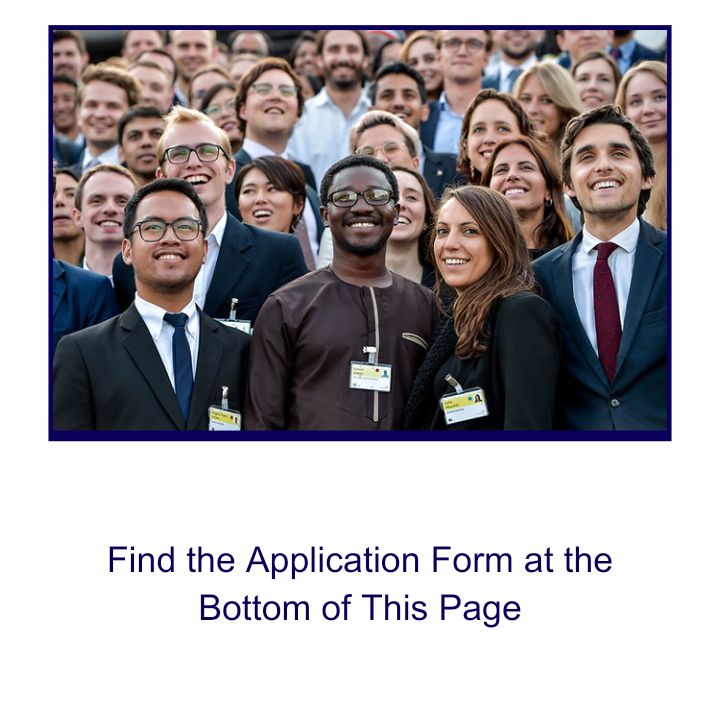
Are you a young professional or postgraduate student who wants to develop your leadership skills, connect with influential people from around the world, and work on solutions to pressing global challenges? The Global Leadership Challenge (GLC) 2026 offers an opportunity to do exactly that.
The Global Leadership Challenge 2026 will bring together 100 young leaders from different countries and academic backgrounds for an international leadership development experience taking place virtually from 10 to 14 December 2026.
The programme is designed for people who want to understand what responsible leadership means in practice and how they can use their knowledge, experience, and influence to contribute to society.
Unlike programmes that focus primarily on individual achievement, the Global Leadership Challenge encourages participants to think about the wider consequences of their decisions.
Throughout the programme, selected participants will engage with global challenges, learn from experienced academics and senior business and policy leaders, and develop action projects using design thinking principles.
One of the most attractive features of the programme is its international accessibility. Participants can take part virtually from different parts of the world, making it possible to join the experience without relocating to another country for the main programme.
The opportunity is open to eligible applicants worldwide, regardless of their academic discipline.
However, applicants must demonstrate a genuine commitment to responsible leadership through their work experience, extracurricular activities, or other practical contributions.
Applications opened on 29 September 2026 and will close on 5 November 2026. Since applications are reviewed on a rolling basis, interested candidates should consider applying early rather than waiting until the final day.
If you are interested in international leadership, social impact, responsible decision-making, and professional development, here is everything you need to know about the Global Leadership Challenge 2026.
Overview of the Global Leadership Challenge 2026
Before preparing your application, take a moment to review the programme details.
Programme Name: Global Leadership Challenge 2026
Programme Type: International leadership development programme
Organisers: Global Leadership Challenge, in collaboration with the University of Oxford’s Oxford Character Project and the St. Gallen Symposium
Number of Participants: 100 young leaders
Location: Virtual participation from anywhere in the world
Programme Dates: 10–14 December 2026
Application Opening Date: 29 September 2026
Application Deadline: 5 November 2026
Eligible Applicants: Postgraduate students and young professionals who meet the programme’s criteria
Age Requirement: Young professionals must be between 21 and 30 years old; postgraduate students must be enrolled in a master’s or PhD programme
Academic Requirement: Applicants must have completed their undergraduate studies
Eligible Nationalities: Applicants from around the world
Eligible Academic Backgrounds: All academic disciplines
Certificate: Official Certificate of Achievement for active participants who meet the participation requirements
Additional Opportunity: Teams selected among the top three performing teams can receive invitations to the 56th St. Gallen Symposium in April 2027, with travel and accommodation expenses covered
Application Method: Online application
Official application page: https://www.leadership-challenge.org/applynow
What Is the Global Leadership Challenge?
The Global Leadership Challenge is an international initiative that brings together emerging leaders to explore how leadership can contribute to a better and more responsible society.
The 2026 edition will select 100 young leaders through an open application process.
The organisers are particularly interested in candidates who demonstrate an interest in complex global problems and a willingness to develop the skills needed to address them responsibly.
The programme recognises that leadership is not simply about holding a senior position, managing an organisation, or achieving personal success.
It also involves understanding the consequences of decisions, considering the interests of others, and working towards outcomes that benefit society.
For example, a participant interested in artificial intelligence might explore how organisations can introduce new technologies without overlooking the importance of human judgement.
Someone working in education might consider how learning programmes can prepare young people for an uncertain future. Another participant might be interested in ethical business practices, public policy, social inclusion, or sustainable development.
The programme welcomes applicants from different disciplines because global challenges rarely fit neatly within one field of study.
Participants will have the opportunity to exchange perspectives, work collaboratively, and explore practical responses to the challenges introduced during the programme.
Importantly, the Global Leadership Challenge is not limited to people who already hold impressive leadership titles. The eligibility criteria also recognise leadership demonstrated through extracurricular activities and work experience.
This means applicants should focus on showing how they have taken responsibility, contributed to a team, supported others, or tried to improve a situation.
Benefits of the Global Leadership Challenge 2026
The Global Leadership Challenge offers several benefits for selected participants, including international networking, leadership development, mentorship opportunities, a certificate, and the possibility of attending the St. Gallen Symposium in Switzerland.
1. Join a Global Community of Young Leaders
One of the central benefits of the Global Leadership Challenge is the opportunity to become part of an international community of emerging leaders.
The 2026 programme will bring together 100 selected participants from different countries and academic backgrounds.
This creates an environment where participants can exchange ideas, compare experiences, and learn how people in different contexts approach difficult problems.
For a young professional, these conversations can be particularly valuable. A challenge that appears straightforward in one country may require a completely different approach elsewhere because of differences in institutions, resources, culture, or public expectations.
Working with people who have different experiences can help participants recognise assumptions they might otherwise overlook.
The virtual format also makes international participation possible without requiring applicants to move abroad for the programme itself.
2. Learn from Academics and Senior Business and Policy Leaders
Participants will have opportunities to engage with world-renowned academics and senior leaders from business and public policy.
These interactions are intended to expose young leaders to different ways of thinking about leadership, decision-making, and global challenges.
Rather than viewing leadership only as a theoretical subject, participants can explore how responsible leadership relates to the decisions people make in professional and public life.
For applicants interested in policy, international development, business, technology, research, or public service, this exposure may provide useful perspectives for their future careers.
It is worth remembering, however, that the programme is a learning and leadership development experience, not a guarantee of employment or future professional appointments.
3. Develop an Action Project Addressing a Global Challenge
The Global Leadership Challenge places emphasis on moving beyond discussion and exploring possible solutions.
Participants will develop action projects addressing pressing global challenges using design thinking principles.
Design thinking is a problem-solving approach that encourages people to understand the needs of those affected by a problem, examine the underlying causes, generate ideas, and explore practical solutions.
This approach can be useful when dealing with complex issues because the first solution that comes to mind is not always the most effective one.
For example, a team examining workforce development might investigate how technological change affects employees’ skills and professional judgement.
Instead of assuming that introducing new technology automatically improves productivity, the team could explore what workers need to use that technology effectively and responsibly.
The programme’s challenge topics provide a starting point for this kind of collaborative work.
For participants, the experience offers an opportunity to practise analysing problems, discussing different viewpoints, and developing ideas with people who bring different forms of expertise.
4. Receive an Official Certificate of Achievement
Active participants who satisfy the programme’s participation requirements will receive an official Certificate of Achievement from the University of Oxford and the St. Gallen Symposium.
This certificate can provide evidence of participation in an international leadership development programme.
It may also be useful when updating a CV, describing professional development activities, or documenting involvement in leadership initiatives.
However, applicants should understand that the certificate is tied to active participation. The organisers state that participation in all Global Leadership Challenge sessions is mandatory to receive it.
Therefore, anyone who applies should be prepared to attend the programme throughout the required dates rather than treating the certificate as something automatically awarded upon selection.
5. Receive Leadership Training and Mentorship
Another important feature of the programme is its connection with the Oxford Character Project at the University of Oxford.
The Global Leadership Challenge offers bespoke leadership training and mentorship intended to help participants reflect on responsible leadership and develop their abilities.
The emphasis on character and responsibility is especially relevant to people who want to consider not only what they can achieve as leaders but also how they make decisions and how those decisions affect others.
After successfully participating in the Global Leadership Challenge, members can also apply for further mentoring in leadership development through the Oxford Character Project.
This additional mentoring is an application-based opportunity, so participants should not assume that everyone automatically receives it.
For those who are accepted, the experience can provide a structured opportunity to reflect on personal purpose, leadership values, and future development.
6. Opportunity to Attend the 56th St. Gallen Symposium in 2027
One of the programme’s most distinctive opportunities is the possibility of attending the 56th St. Gallen Symposium in April 2027.
The three winning teams from the Global Leadership Challenge will be offered invitations to participate in the symposium as Leaders of Tomorrow.
According to the programme information, the travel and accommodation expenses of those selected for this opportunity will be fully covered.
The St. Gallen Symposium brings emerging leaders into dialogue with senior figures from business, politics, academia, and other areas of public life.
For young professionals and postgraduate students, this opportunity could provide exposure to international discussions about the future of society, leadership, economics, and global cooperation.
However, this benefit is competitive. It is reserved for the three winning teams, rather than every person selected for the Global Leadership Challenge.
Applicants should therefore view the symposium invitation as an additional possibility, not a guaranteed benefit of joining the programme.
7. Participate from Anywhere in the World
The Global Leadership Challenge allows members to participate virtually from around the world.
This is an important consideration for applicants who cannot easily travel internationally or take time away from their studies or employment to attend an in-person programme.
Because the main programme is virtual, participants can join from their home countries, provided they have the necessary internet access and can attend the scheduled sessions.
Nevertheless, the programme requires a meaningful time commitment. The organisers ask applicants to reserve approximately five half-days from 10 to 14 December 2026.
You should therefore consider the programme dates carefully before applying, especially if you have examinations, work commitments, or other responsibilities during that period.
Global Leadership Challenge 2026: Eligibility Criteria
The Global Leadership Challenge welcomes applications from around the world and from all academic disciplines. However, interested candidates must meet the relevant eligibility requirements.
Before beginning the application, review each requirement carefully.
1. You Must Be a Postgraduate Student or Young Professional
The programme is intended for two main groups of applicants.
Postgraduate students: You must currently be enrolled in a master’s or PhD programme.
Young professionals: You must be between 21 and 30 years old.
The programme also requires applicants to have completed their undergraduate studies.
If you are still pursuing your bachelor’s degree and have not completed it, you should carefully review the official eligibility information before submitting an application.
2. You Must Have Completed Your Undergraduate Studies
Applicants are expected to have finished their undergraduate education.
Postgraduate students must be enrolled in a master’s or PhD programme, while eligible young professionals must satisfy the programme’s age requirement.
If you are applying as a student, prepare proof of your current postgraduate enrolment because the application process specifically requests this document from student applicants.
3. You Must Demonstrate a Commitment to Responsible Leadership
The organisers are looking for people who have already demonstrated a commitment to responsible leadership through extracurricular activities, work experience, or similar involvement.
This requirement is important because the programme is not simply seeking applicants who are interested in leadership in theory.
It wants to identify people who have made efforts to contribute positively to their communities, organisations, or professional environments.
Your experience does not necessarily need to come from a formal leadership position.
For example, relevant experiences might include coordinating a student initiative, contributing to a community project, helping organise a professional activity, supporting a social enterprise, taking responsibility within a workplace team, or participating in an initiative that addresses a local challenge.
These are illustrative examples rather than an official list of qualifying activities.
What matters is your ability to explain what you did, why it mattered, and how your actions reflected responsible leadership.
When preparing your application, think about an experience in which you took responsibility, considered the needs of others, helped solve a problem, or contributed to a shared objective.
A specific example is usually more informative than simply describing yourself as passionate about leadership.
4. You Must Be Available from 10 to 14 December 2026
The Global Leadership Challenge will take place from 10 to 14 December 2026. Applicants are asked to tentatively block these dates and commit approximately five half-days to the programme.
The organisers make it clear that active participation in all sessions is mandatory for receiving the Certificate of Achievement.
Before applying, check your academic calendar, work schedule, and other commitments.
Although the programme is virtual, that does not mean attendance is optional. You will need to be available for the required sessions and participate actively throughout the experience.
5. Applicants from All Countries Can Apply
The Global Leadership Challenge welcomes applications from around the world. The published eligibility information does not restrict participation to a particular nationality or academic discipline.
This makes the opportunity relevant to eligible candidates from Africa, Asia, Europe, North America, South America, and other regions.
Applicants from developing countries who are interested in international leadership development may find the programme particularly attractive because it provides a way to participate in a global initiative without relocating for the main programme.
However, all applicants must still meet the academic or professional eligibility requirements and demonstrate their commitment to responsible leadership.
Global Leadership Challenge 2026 Application Deadline
The application deadline for the Global Leadership Challenge 2026 is 5 November 2026.
Here are the important dates to remember:
| Event | Date |
| Applications open | 29 September 2026 |
| Application deadline | 5 November 2026 |
| Global Leadership Challenge programme | 10–14 December 2026 |
| 56th St. Gallen Symposium | April 2027 |
The organisers state that applications are reviewed on a rolling basis.
This means applications may be considered as they arrive rather than being held until the deadline for one final review.
For that reason, interested candidates should avoid leaving the application until the last minute.
Applying early gives you more time to prepare the requested documents, check your video link, and make sure that your answers are complete.
It is also important to distinguish between submitting an application and being selected. Meeting the deadline does not guarantee admission, and the programme will select only 100 participants.
Application Documents Required for the Global Leadership Challenge 2026
The application process requires personal information, supporting documents, and responses to several questions.
Preparing these materials before opening the application form can make the process more straightforward.
1. Personal Information
Applicants should be prepared to provide basic personal and contact information, including:
Full name and other requested personal details
Email address
Residential or mailing address
Contact information
Enter your details carefully and use an email address that you check regularly.
Your email address is particularly important because it is a key means of communication during an application process.
2. Curriculum Vitae (CV)
Applicants must prepare a CV in PDF format.
Your CV should help the selection team understand your educational background, professional experience, extracurricular involvement, and leadership activities.
Because the programme focuses on responsible leadership, make sure that relevant experiences are easy to identify.
For example, if you have helped coordinate a community project, participated in a student organisation, contributed to a workplace initiative, or supported a social-impact activity, include that experience where appropriate.
Describe your actual responsibilities rather than relying on broad statements.
If you worked with a team, explain your contribution. If you helped organise an activity, identify what you were responsible for. If you participated in a project addressing a social challenge, briefly describe the project and your role.
Keep the information accurate and ensure that the document is saved as a PDF before uploading or submitting it as instructed.
3. Recent Portrait Photograph
The application requires a recent portrait picture in JPEG or PNG format.
Choose a clear photograph in which your face is visible.
Before submitting it, confirm that the file is saved in one of the accepted formats and can be opened properly.
4. Proof of Enrolment for Student Applicants
Applicants applying as students must provide proof of enrollment in PDF format.
This document should establish that you are currently enrolled in a master’s or PhD programme.
Check that your document is readable and contains the information needed to establish your current enrollment.
The published instructions specify this requirement for students. If you are applying as a young professional rather than as a postgraduate student, follow the application form’s instructions for your applicant category.
The Three Questions You Must Prepare for the Application
Beyond your personal information and documents, the Global Leadership Challenge asks applicants to respond to three questions or prompts.
These questions provide an opportunity to demonstrate your interests, communication skills, and understanding of responsible leadership.
Question 1: Suggest a Keynote Speaker Who Could Inspire Responsible Leadership
Applicants are asked to suggest a keynote speaker who could inspire global leaders to act responsibly.
This question gives you an opportunity to show how you think about leadership and whose ideas you consider relevant to the challenges facing society.
When choosing a speaker, consider what makes that person’s perspective valuable.
You might select someone known for ethical leadership, public service, scientific innovation, social impact, responsible business, peacebuilding, or efforts to address global challenges.
However, the important part is not simply naming a famous person. Think about the connection between your proposed speaker and the programme’s focus.
Ask yourself:
What leadership lessons could this person share?
Which global challenge could their experience help participants understand?
How might their perspective encourage leaders to act responsibly?
What makes their contribution relevant to young leaders today?
If the application form allows you to explain your choice, use that space to make your reasoning clear.
A thoughtful answer should show that you have considered the programme’s purpose rather than selecting a name solely because the person is well known.
Question 2: Record a Video of No More Than 40 Seconds
Applicants must record a short video in English with a message inspiring global leaders to practise responsible leadership.
The maximum permitted length is 40 seconds.
This is a particularly important part of the application because it asks you to communicate an idea directly rather than relying entirely on written responses.
A 40-second video is brief, so you should decide on your central message before recording.
You do not need to cover every aspect of responsible leadership. Instead, choose one meaningful idea and communicate it clearly.
For instance, you could focus on the importance of considering the consequences of decisions, listening to people affected by those decisions, using power responsibly, or balancing innovation with human welfare.
These are possible themes, not prescribed answers.
Your message should reflect your own understanding of responsible leadership.
How to Prepare Your 40-Second Video
Start by writing a short message that can be delivered comfortably within the time limit.
Read it aloud and time yourself. If it takes longer than 40 seconds, remove unnecessary words and keep the central idea.
You should then record yourself speaking clearly in English.
A simple recording setup is sufficient if it produces clear video and understandable audio. Choose a quiet place, position the camera so your face is visible, and avoid unnecessary distractions in the background.
Before submitting the recording, watch it from beginning to end.
Check the following:
The video is no longer than 40 seconds.
The message is delivered in English.
Your voice can be heard clearly.
Your face is visible.
The file is saved in MP4 or MOV format.
The uploaded video can be accessed through the link you provide.
Most importantly, make sure the message sounds natural. You should understand what you are saying rather than simply trying to memorise a collection of impressive phrases.
Question 3: Give a Concrete Example of Responsible Leadership in No More Than 50 Words
The third prompt asks applicants to share one concrete example of how they personally put responsible leadership into practice.
Your response must not exceed 50 words.
This question is an opportunity to connect your leadership values with something you have actually done.
Instead of writing a general statement about believing in fairness or wanting to help people, identify a real situation in which you took action.
For example, you might describe how you helped resolve a disagreement within a team, supported a community initiative, considered the needs of people affected by a decision, or took responsibility for improving a process.
These are examples of possible experiences, not activities required by the organisers.
A useful way to structure your response is to identify the situation, explain what you did, and briefly state the outcome or lesson.
Keep the answer within the word limit and ensure that the example is genuinely yours.
Do not invent leadership experiences to make your application appear stronger. A small but meaningful example that you can explain honestly is more appropriate than an exaggerated story.
How to Upload and Submit Your 40-Second Video
After recording your video, you must upload it to a supported platform and provide a shareable link in the application form.
The programme lists several platforms you can use.
Option 1: Google Drive
You can upload the video to Google Drive and generate a shareable link.
Official website: https://drive.google.com/
After uploading the file, review the sharing settings. The organisers require the link to be accessible without the viewer needing to sign in or request special permission.
Option 2: Microsoft OneDrive
You can also use Microsoft OneDrive to store your video and share it with the selection team.
Official website: https://www.microsoft.com/en-us/microsoft-365/onedrive/online-cloud-storage
Once the video has uploaded, create a sharing link and check that the permissions allow the intended viewers to access it.
Option 3: YouTube
YouTube is another accepted option.
Official website: https://www.youtube.com/
If you upload your video to YouTube, set its visibility to Unlisted, as specified in the programme instructions.
An unlisted video is not displayed publicly in the same way as a public video, but people with the link can view it. Anyone who needs access must still be able to open the link without being blocked by additional restrictions.
Option 4: iCloud Drive
Applicants can use iCloud Drive to store and share their videos.
Official website: https://www.icloud.com/iclouddrive
After uploading the file, create a shareable link and confirm that the access settings are suitable.
Option 5: SwissTransfer
SwissTransfer is another platform listed by the organisers for sharing the video.
Official website: https://www.swisstransfer.com/
Follow the platform’s instructions to upload the file and generate a link that the selection team can open.
Option 6: Dropbox Transfer
Dropbox is also listed as an option for sharing the video.
Official website: https://www.dropbox.com/transfer
Upload your video, generate the shareable link, and check that it works as intended.
Important: Check Your Video Link Before Submitting
One of the easiest mistakes to avoid is submitting a link that the selection team cannot open.
Uploading the video successfully does not automatically mean that everyone with the link can view it.
Before completing your application:
- Upload your video in MP4 or MOV format.
- Copy the shareable link.
- Check that the permissions allow anyone with the link to view the video.
- Make sure a login, password, or organisational account is not required.
- Open the link in a private or incognito browser window to test access.
- Confirm that the correct video plays and that its duration does not exceed 40 seconds.
- Paste the working link into the designated field in the application form.
Taking these steps can help you avoid a preventable technical problem.
Global Leadership Challenge 2026: Current Challenge Topics
The programme has announced challenge topics involving Swiss Re and Schwarzman Scholars, with an additional challenge partner still to be announced.
These topics give applicants an idea of the kinds of questions participants may explore.
Challenge 1: Swiss Re — Building a Future-Ready Workforce
One of the announced challenges focuses on how organisations can prepare their workforces for a future shaped by rapid technological change, evolving risks, and changing expectations.
The challenge is being developed with Swiss Re.
It explores how human expertise, critical thinking, and artificial intelligence can work together to reshape the workplace, strengthen judgement, and develop the capabilities people will need in the future.
This topic is relevant to people interested in technology, business, human resources, organisational development, economics, and the future of work.
As artificial intelligence becomes more widely used, organisations must consider more than the technical capabilities of new tools.
They must also think about how employees can evaluate information, identify potential errors, exercise judgement, and take responsibility for decisions.
For example, an organisation may introduce AI tools to improve efficiency, but employees still need to understand when to question an automated recommendation or recognise a situation that requires human intervention.
The challenge invites participants to explore these kinds of questions and consider how organisations can build a workforce that is prepared for uncertainty.
Applicants who are interested in this area may find it useful to reflect on the relationship between technological innovation and responsible decision-making.
Challenge 2: Schwarzman Scholars, Preparing Future Global Leaders for Uncertainty
Another challenge involves Schwarzman Scholars and its evolving curriculum for developing future global leaders.
Following its first decade, the programme is seeking insights into how its curriculum could be refined or expanded to continue equipping scholars with the tools needed to navigate uncertainty over the coming decades.
This challenge focuses on leadership education and the skills that future leaders may need as global conditions change.
It raises questions about how educational programmes can prepare people to respond to unfamiliar problems, make informed decisions, work across different perspectives, and lead responsibly in uncertain circumstances.
Participants interested in education, international relations, public policy, leadership development, or global affairs may find this topic particularly relevant.
The challenge also highlights the importance of reviewing leadership education over time. The knowledge and approaches that serve leaders well today may need to evolve as technology, institutions, and societal expectations change.
Challenge 3: An Additional Partner to Be Announced
The organisers have also indicated that another challenge partner will be announced.
Further details are expected to be published by the programme.
Applicants should consult the official Global Leadership Challenge website for updates on the additional partner and any new challenge information.
How to Apply for the Global Leadership Challenge 2026
The application process is completed online. If you meet the eligibility requirements and are interested in participating, follow these steps to prepare and submit your application.
Step 1: Review the Official Programme Information
Begin by visiting the official Global Leadership Challenge website.
Read the eligibility requirements, programme dates, benefits, and application instructions carefully.
Official programme website: https://www.leadership-challenge.org/applynow
Make sure you understand the commitment required and can participate in all the sessions scheduled from 10 to 14 December 2026.
Step 2: Prepare Your CV
Prepare your CV and save it in PDF format.
Include your educational background, relevant work experience, extracurricular activities, and evidence of your commitment to responsible leadership.
Focus on presenting your actual experiences clearly and accurately.
Step 3: Prepare Your Portrait Photograph
Choose a recent portrait photograph and save it in JPEG or PNG format. Check that the image is clear and that the file opens correctly.
Step 4: Obtain Proof of Enrolment if You Are a Student
If you are applying as a postgraduate student, prepare proof of enrolment in PDF format.
Confirm that it demonstrates your current enrollment in a master’s or PhD programme.
Step 5: Prepare Your Responses to the Three Questions
Think carefully about your proposed keynote speaker, your 40-second video message, and your personal example of responsible leadership.
Keep the video within the time limit and the written example within the 50-word limit.
Make sure your answers reflect your own views and experiences.
Step 6: Upload Your Video and Test the Link
Upload your video to one of the platforms accepted by the organisers.
Check that the file is accessible without requiring the selection team to sign in or request permission. Copy the working link and keep it ready for the application form.
Step 7: Complete the Online Application Form
Enter your personal information, provide the requested documents, and answer the application questions.
Review your entries carefully before submitting the form. Check that your contact details are correct, your documents are in the required formats, and your video link works.
Step 8: Submit Your Application Before 5 November 2026
The official deadline is 5 November 2026.
Because applications are reviewed on a rolling basis, it is sensible to submit your application as early as you reasonably can.
You can access the application form through the official link below. Apply here: https://form.jotform.com/262503401593047
Why This Opportunity May Be Worth Considering
The Global Leadership Challenge is particularly relevant to young professionals and postgraduate students who want to strengthen their leadership skills while learning from people with different professional and academic backgrounds.
Its emphasis on responsible leadership makes it different from opportunities that focus exclusively on professional advancement or individual achievement.
Participants are encouraged to consider the relationship between leadership, personal responsibility, and the wider effects of decisions.
The programme also combines several elements: international collaboration, engagement with experienced leaders, action-project development, leadership training, and potential further mentorship.
For someone interested in global affairs, social impact, business, technology, or public service, these elements may offer a useful opportunity to explore leadership from different perspectives.
The possibility of attending the 56th St. Gallen Symposium in April 2027 adds another attractive feature, although this is reserved for the three winning teams and should not be confused with a guaranteed benefit for every participant.
Applicants should also remember that the programme is selective. Only 100 young leaders will be chosen, and the application asks candidates to demonstrate their commitment to responsible leadership rather than simply expressing an interest in the subject.
Frequently Asked Questions About the Global Leadership Challenge 2026
1. What is the Global Leadership Challenge 2026?
The Global Leadership Challenge 2026 is an international leadership development programme that will select 100 young leaders to participate virtually from 10 to 14 December 2026.
Participants will engage with global challenges, learn from experienced academics and senior leaders, and develop action projects using design thinking principles.
2. Is the Global Leadership Challenge 2026 open to international applicants?
Yes. The programme welcomes applications from around the world and from all academic disciplines, provided applicants meet the eligibility requirements.
3. Can I participate in the Global Leadership Challenge online?
Yes. The programme allows selected participants to participate virtually from around the world.
However, applicants must be available for the required sessions from 10 to 14 December 2026.
4. How many participants will be selected?
The Global Leadership Challenge 2026 will select 100 young leaders through an open application process.
5. What is the age limit for the programme?
The published eligibility criteria specify that young professionals must be between 21 and 30 years old.
Postgraduate student applicants must currently be enrolled in a master’s or PhD programme and must have completed their undergraduate studies.
If your circumstances do not fit these categories clearly, consult the official application instructions before submitting your application.
6. Can undergraduate students apply?
The published criteria require applicants to have completed their undergraduate studies. Student applicants must currently be enrolled in a master’s or PhD programme.
Therefore, applicants who are still pursuing their first undergraduate degree should not assume they are eligible.
7. Do I need work experience to apply?
The programme requires applicants to have demonstrated a commitment to responsible leadership through extracurricular activities and/or work experience.
The published information does not state that every applicant must have a particular number of years of employment.
Relevant experiences may include professional responsibilities, community involvement, student initiatives, or other activities demonstrating a commitment to responsible leadership.
8. Is the Global Leadership Challenge fully funded?
The programme is virtual, allowing selected participants to participate from around the world without relocating for the main programme.
The published information confirms that the travel and accommodation expenses of members of the three winning teams invited to the 56th St. Gallen Symposium will be fully covered.
However, the available programme information does not establish a general cash award, stipend, or comprehensive funding package for every Global Leadership Challenge participant. Applicants should not assume that such funding is provided.
9. Will I receive a certificate after completing the programme?
Yes. Active participants who satisfy the participation requirements will receive an official Certificate of Achievement from the University of Oxford and the St. Gallen Symposium.
Participation in all GLC sessions is mandatory to receive the certificate.
10. Can participants attend the St. Gallen Symposium in Switzerland?
The three winning teams will be offered invitations to attend the 56th St. Gallen Symposium in April 2027 as Leaders of Tomorrow.
Their travel and accommodation expenses will be fully covered, according to the programme information. This opportunity is competitive and is not guaranteed to every participant.
11. What documents are required?
Applicants should prepare:
A CV in PDF format
A recent portrait photograph in JPEG or PNG format
Proof of enrolment in PDF format, for student applicants
They must also provide personal information and respond to the application questions, including a keynote speaker suggestion, a 40-second video in English, and a personal example of responsible leadership in no more than 50 words.
12. What is the deadline for the Global Leadership Challenge 2026?
The application deadline is 5 November 2026. Applications are reviewed on a rolling basis, so applicants are encouraged to submit their materials early.
13. Where can I apply?
You can apply through the official online application form: https://form.jotform.com/262503401593047
You can also visit the programme’s official website for additional information: https://www.leadership-challenge.org/applynow
Final Conclusion
The Global Leadership Challenge 2026 offers postgraduate students and young professionals an opportunity to develop their leadership skills, work with an international group of emerging leaders, and explore practical responses to complex global challenges.
The programme’s combination of virtual participation, action-project development, engagement with experienced leaders, and leadership training makes it worth considering for eligible candidates who want to become more thoughtful and responsible leaders.
The application process also gives candidates an opportunity to reflect on their own experiences.
The request for a personal example of responsible leadership encourages applicants to look beyond titles and achievements and consider how they have put their values into practice.
If you are interested in applying, start by checking your eligibility, preparing your CV, and thinking about the experiences that best demonstrate your commitment to responsible leadership.
Give yourself enough time to record your video, test the sharing link, and review your application before submission.
Remember that the programme will select only 100 participants, and applications are reviewed on a rolling basis.
Application deadline: 5 November 2026
Programme dates: 10–14 December 2026
Apply for the Global Leadership Challenge 2026 here: https://form.jotform.com/262503401593047
For the latest information about eligibility, challenge partners, and application requirements, always consult the official programme website before submitting your application.
Browse related fellowship programs for African Scholars on scholars Africa website below
7 Nestlé Global Paid Opportunities 2026 for Graduates and Young Professionals
Local Pathways Fellowship for African Youth: Eligibility, Benefits and How to Apply
List of Very interesting Fellowships African Scholars should Apply.
IATSS Forum 2027 in Japan: My Experience Applying for an 8-Week Leadership Development Program
Commonwealth PhD Scholarships 2027: My Experience Applying for a Fully Funded PhD in the UK
5 OHCHR Fellowships and Trainings, The Details, Steps by Steps Application Processes
Discover more from Scholars Africa
Subscribe to get the latest posts sent to your email.

About Scholars Africa Editorial Team
Scholars Africa Editorial Team is dedicated to researching and publishing verified scholarships, jobs, and global opportunities. Our content is built on extensive analysis of application trends, eligibility criteria, and selection patterns to help applicants succeed at every stage. Our team has reviewed hundreds of scholarship programs and application processes across multiple countries.