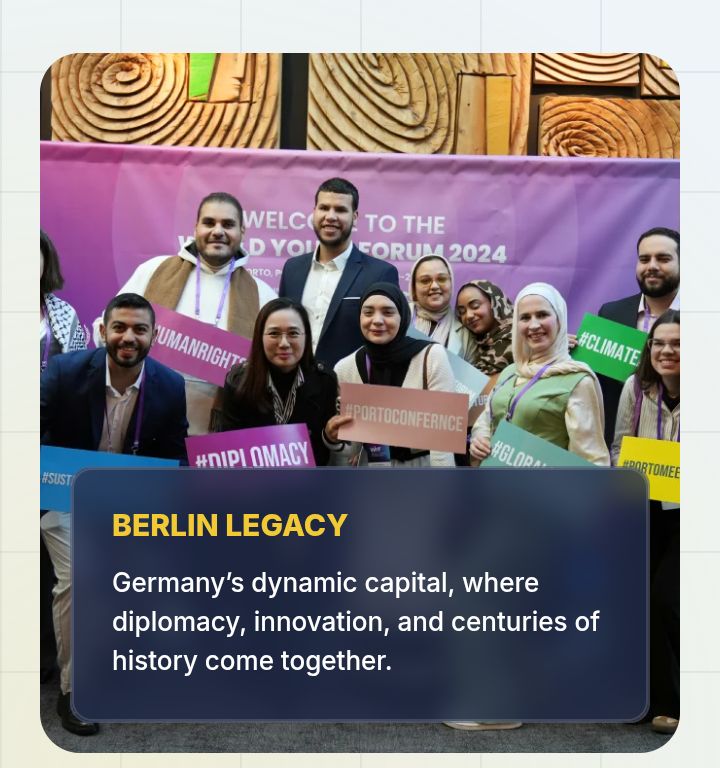
When I submitted my application for the Youth Action Summit (YAS) 2026, I honestly didn’t expect an email saying I had been selected for one of the fully funded scholarships.
Like many international applicants, I had applied for dozens of conferences, fellowships, and youth programmes before. Some never replied. Others rejected my application without feedback. So when the acceptance email finally arrived, it felt unreal.
A few months later, I found myself walking through the streets of Berlin, Germany, surrounded by more than 250 young leaders representing over 125 countries.
Looking back now, I can confidently say this wasn’t just another international conference.
It completely changed how I think about leadership, diplomacy, international cooperation, and even my own career.
If you’re considering applying for the next edition of the Youth Action Summit, here’s what the experience was actually like from someone who lived it.
What the Youth Action Summit Is Really About
Before attending, I imagined four days of speeches, networking sessions, and endless presentations.
I wasn’t entirely wrong. But the summit turned out to be far more interactive than I expected.
Instead of sitting quietly in conference halls all day, participants constantly moved between workshops, policy simulations, leadership exercises, cultural activities, discussion circles, and collaborative projects.
Every session encouraged participation.
Nobody cared whether you came from a famous university or a small local college.
Everyone’s ideas were welcomed.
That created an atmosphere where conversations happened naturally instead of feeling forced.
Arriving in Berlin Felt Like Stepping Into a Global Classroom
The first thing that struck me wasn’t the venue.
It was hearing dozens of different languages while standing in the registration line.
Within an hour I had already spoken with participants from:
Kenya
Nigeria
Pakistan
Brazil
Germany
Indonesia
Canada
Egypt
Mexico
Nepal
Ghana
Ukraine and many other countries.
Despite our different cultures and backgrounds, everyone shared one thing:
We wanted to create positive change in our communities. That instantly broke the ice.
Why Berlin Was the Perfect Host City
I’ve travelled before, but Berlin felt different.
Every street seemed to tell a story.
History wasn’t hidden inside museums.
It surrounded us.
During the cultural tours, we visited famous landmarks while discussing diplomacy, international relations, European history, and global cooperation.
It made the conversations inside the conference rooms feel much more meaningful.
Berlin isn’t just another European city.
It’s a living example of resilience, transformation, and international collaboration.
That made it the perfect location for a leadership summit.
The Leadership Sessions Were Surprisingly Practical
One of my biggest concerns before travelling was that the summit would be filled with motivational speeches that sounded inspiring but offered little practical value.
Thankfully, that wasn’t the case.
Many workshops focused on real-world scenarios.
Instead of talking about negotiation, we actually practised negotiating.
Instead of discussing diplomacy, we participated in diplomatic simulations.
Instead of hearing about policymaking, we worked through actual policy challenges in small international teams.
Those exercises forced everyone to think beyond theory.
Meeting Diplomats Changed My Perspective
One highlight of the summit was interacting directly with diplomats, international advisors, and policy experts.
Reading articles about diplomacy is one thing.
Listening to people who negotiate international agreements for a living is something entirely different.
They shared stories that rarely appear in textbooks.
They talked openly about failed negotiations, political compromises, leadership mistakes, and difficult international decisions.
Those honest conversations were easily among the most memorable parts of the summit.
The Networking Was More Valuable Than I Expected
People often describe conferences as networking opportunities.
Usually that means exchanging business cards and never speaking again.
This summit felt different.
Because we spent several days together—from breakfast until evening activities—we naturally built genuine friendships.
By the final day, it no longer felt like networking.
It felt like saying goodbye to friends.
Even months later, many of us still stay connected through online meetings, collaborative projects, and social media.
Several participants have since partnered on youth initiatives, research projects, and international campaigns.
Working With People From 125+ Countries Was Eye-Opening
One exercise required us to solve a global challenge in multicultural teams.
At first, everyone approached the problem differently.
Some focused on policy.
Others prioritised technology.
Some believed community engagement mattered most.
Initially, the discussions were chaotic.
Eventually, those different perspectives became our biggest strength.
That experience taught me something no classroom ever had:
Diversity doesn’t slow progress.
When managed well, it produces better solutions.
The Fully Funded Scholarship Removed Major Financial Barriers
Receiving the fully funded scholarship meant I could focus entirely on learning instead of worrying about expenses.
The funded package included support such as:
Round-trip airfare
Accommodation
Forum participation
Meals during designated sessions
Official invitation letter for visa purposes
Event materials
Full access to all summit activities
Without that financial support, attending such an international programme would have been extremely difficult.
The Workshops That Left the Biggest Impression
Several sessions stayed with me long after returning home.
Topics included:
Leadership Under Pressure
We explored how leaders make decisions during crises.
Unexpected scenarios forced us to adapt quickly rather than relying on prepared answers.
Public Speaking for Global Audiences
This wasn’t about memorising speeches.
It focused on communicating clearly across cultures.
Small changes in language, tone, and examples made presentations far more effective for international audiences.
Climate Policy Discussions
Participants from climate-vulnerable countries shared personal experiences rather than statistics.
Hearing those stories directly carried much more emotional weight than reading reports online.
Digital Diplomacy
One fascinating discussion examined how governments now use social media alongside traditional diplomatic channels.
It highlighted how technology is reshaping international communication.
The Cultural Exchange Was Just as Important as the Workshops
Some of the most meaningful conversations didn’t happen during official sessions.
They happened over lunch.
Walking through Berlin.
Waiting for buses.
Sharing traditional snacks.
Discussing music.
Comparing education systems.
Talking about our families.
Those informal moments built stronger connections than any scheduled networking session.
What I Learned About Leadership
Before attending, I thought leadership meant being confident and speaking the loudest.
After four days in Berlin, I realised leadership often looks very different.
The strongest leaders:
Ask thoughtful questions.
Listen more than they speak.
Stay curious.
Encourage quieter voices.
Admit when they don’t know something.
Help others succeed.
Watching experienced diplomats interact reinforced this lesson repeatedly.
The Certificate Wasn’t the Biggest Reward
Yes, receiving an internationally recognised participation certificate was valuable.
It strengthened my CV and LinkedIn profile.
But surprisingly, it wasn’t what mattered most.
The real value came from the people I met.
The conversations.
The collaborations.
The confidence I gained.
Those experiences continue to influence my professional journey long after returning home.
Who Should Apply for the Youth Action Summit?
Based on my experience, this summit is ideal for:
University students
Recent graduates
Young professionals
Youth advocates
Community organisers
Entrepreneurs
Volunteers
Future diplomats
Anyone passionate about leadership and international cooperation
One thing I appreciated most was that participants came from incredibly diverse educational and professional backgrounds.
You don’t need years of experience to contribute meaningfully.
Eligibility at a Glance
Applicants generally need to:
Be between 16 and 45 years old.
Have a working knowledge of English.
Be interested in leadership, diplomacy, policymaking, or global development.
Come from any country or educational background.
The summit welcomes participants from around the world, making it one of the most internationally diverse youth leadership events in Europe.
Important Dates
If you’re planning to apply, keep these dates in mind:
Application Deadline: 5 October 2026
Summit Dates: 11–14 January 2027
Location: Berlin, Germany
Applications are competitive, especially for the fully funded scholarship category, so submitting a strong application before the deadline is essential.
Final Thoughts: Was It Worth It?
Without hesitation, yes.
I arrived in Berlin expecting another international conference.
I left with a global network of friends, fresh perspectives on leadership, and a renewed sense of purpose.
The Youth Action Summit wasn’t simply about attending workshops or collecting a certificate. It was about discovering how people from completely different cultures can come together to tackle shared global challenges through dialogue, collaboration, and mutual respect.
If you’re searching for a fully funded youth conference in Europe, an international leadership summit for students and young professionals, or a chance to build meaningful global connections, the Youth Action Summit 2027 in Berlin is one opportunity that deserves serious consideration.
Looking back, submitting that application turned out to be one of the best decisions I made. Sometimes a single opportunity doesn’t just add a line to your CV—it changes the way you see the world, and your place in it.
OFFICIAL WEBSITE FOR APPLICATIONS
Browse similar opportunities below
List of 7 Nestle Global Paid Opportunities, Details and Application processes.
List of Very interesting Fellowships African Scholars should Apply.
Eric Bleumink Fellowship 2027 in the Netherlands (Fully Funded Master’s Scholarship)
Apply for UK Winter Fellowship 2027 in London: A Paid AI Governance Fellowship with £12,000 Salary
Discover more from Scholars Africa
Subscribe to get the latest posts sent to your email.
About Scholars Africa Editorial Team
Scholars Africa Editorial Team is dedicated to researching and publishing verified scholarships, jobs, and global opportunities. Our content is built on extensive analysis of application trends, eligibility criteria, and selection patterns to help applicants succeed at every stage. Our team has reviewed hundreds of scholarship programs and application processes across multiple countries.