Are you a mid-career professional working to strengthen democracy, promote development, or advance the rule of law in your country? Have you been involved in public policy, civil society, journalism, legal reform, economic development, or civic leadership and want to take your work to the next level?
If so, the Fisher Family Summer Fellows Program on Democracy and Development 2027 at Stanford University may be an opportunity worth exploring.
Hosted by Stanford University’s Center on Democracy, Development and the Rule of Law (CDDRL), the Fisher Family Summer Fellows Program brings together mid-career practitioners from transitioning countries who are working to advance democratic practices, economic reform, and legal development.
The programme is designed for people who are already contributing to change in their societies and have the potential to make an even greater impact.
Unlike opportunities aimed primarily at university students or recent graduates, this programme focuses on experienced professionals who have already built a record of meaningful work in their communities, institutions, or countries.
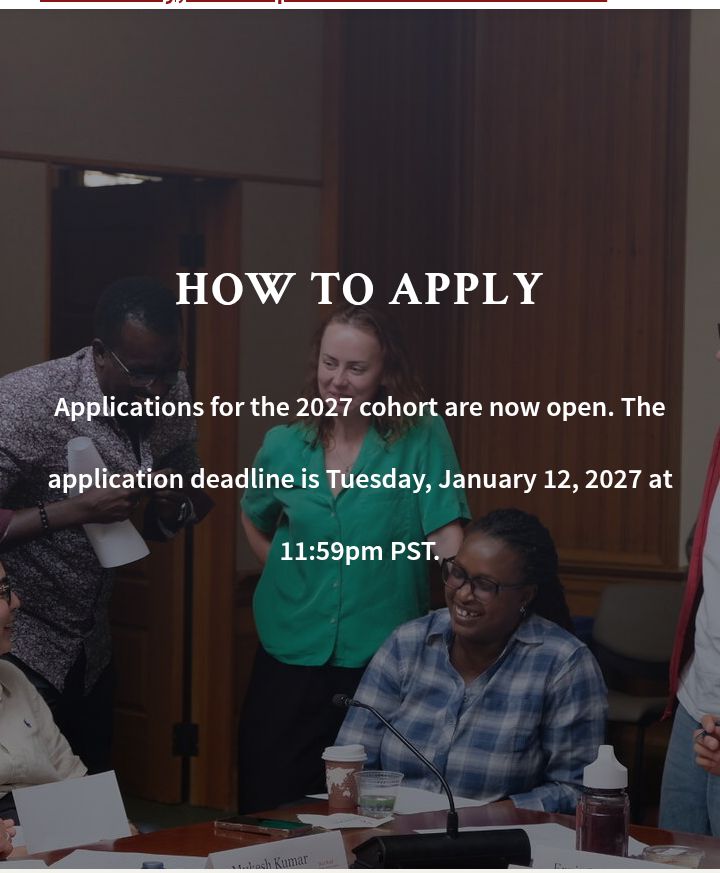
Applications for the 2027 cohort are now open, and the deadline is Tuesday, 12 January 2027, at 11:59 p.m. Pacific Standard Time (PST).
In this guide, I will walk through the Fisher Family Summer Fellows Program, its purpose, who it is designed for, the application process, and how to prepare an application that clearly communicates your leadership experience and potential.
Fisher Family Summer Fellows Program 2027: Overview
Here are the key details applicants should know.
| Programme Detail | Information |
| Programme Name | Fisher Family Summer Fellows Program on Democracy and Development |
| Host Institution | Stanford University |
| Host Centre | Center on Democracy, Development and the Rule of Law (CDDRL) |
| Host Institute | Freeman Spogli Institute for International Studies (FSI) |
| Location | Stanford University, California, USA |
| Programme Year | 2027 |
| Target Applicants | Mid-career practitioners from transitioning countries |
| Cohort Size | Approximately 28–30 fellows |
| Application Status | Open |
| Application Deadline | 12 January 2027 |
| Deadline Time | 11:59 p.m. PST |
| Programme Focus | Democracy, development, economic reform, rule of law, and governance |
Important: The information supplied confirms that applications for the 2027 cohort are open and provides the deadline. Applicants should consult the official programme page for the complete eligibility requirements, selection criteria, programme dates, costs, and application instructions.
What Is the Fisher Family Summer Fellows Program?
The Fisher Family Summer Fellows Program is an annual training programme hosted by Stanford University’s Center on Democracy, Development and the Rule of Law.
The programme was launched in 2005 and was formerly known as the Draper Hills Summer Fellows Program.
It brings together a group of approximately 28–30 mid-career professionals from transitioning countries who are working to advance democracy, economic and legal reform, and development in societies where freedom, human development, and good governance may be fragile or at risk.
The programme recognises that democratic and development challenges are rarely solved by one person or one institution.
They require people who understand the realities of their communities, have experience working within institutions, and are committed to improving the systems that affect people’s lives.
The Summer Fellows Program offers an opportunity for these practitioners to learn from one another, engage with academic and professional perspectives, and develop their capacity to contribute to democratic and development processes.
Apply for UK Winter Fellowship 2027 in London: A Paid AI Governance Fellowship with £12,000 Salary
Who Is the Programme Designed For?
The Fisher Family Summer Fellows Program is intended for mid-career practitioners from transitioning countries who are already working to advance democracy and development.
This is an important distinction. The programme is not primarily designed for applicants who are only beginning to explore leadership or public service.
It is aimed at professionals who have already been involved in meaningful work and can demonstrate a commitment to improving their societies.
The programme’s alumni have come from a wide range of professional backgrounds, including:
Presidential advisors
Senators and other public officials
Attorneys general
Lawyers
Journalists
Civic activists
Entrepreneurs
Judges
Think-tank directors
International development professionals
This diversity shows that the programme is not limited to one professional sector.
A person working in civil society may approach democracy and development differently from someone working in government, journalism, the legal profession, or economic reform.
The programme brings these different perspectives together.
Why the Fisher Family Summer Fellows Program Is Worth Considering
There are several reasons why this programme may be valuable for experienced professionals working in democracy and development.
1. It is designed for people already making a difference
The programme focuses on practitioners who have already made significant contributions to their societies.
This means applicants should think carefully about the work they have done, the challenges they have addressed, and the results they have helped achieve.
If you have worked on public policy, governance, civic engagement, institutional reform, human rights, legal reform, or development initiatives, you may have experiences that are relevant to the programme’s objectives. The key is to explain those experiences clearly.
2. You join an international network of practitioners
The Summer Fellows alumni network includes 536 alumni from 104 developing democracies worldwide. The network brings together professionals working in different countries and sectors.
For a mid-career practitioner, connecting with people who face similar governance and development challenges can be valuable.
The issues confronting a civil society leader may differ from those faced by a public official or journalist, but they may share common questions about accountability, institutional reform, civic participation, and democratic development.
3. The programme brings together different professional perspectives
The alumni network includes people from many professional backgrounds. This matters because democracy and development are not limited to political institutions.
They also involve legal systems, economic opportunities, public administration, civic participation, information, and the ability of communities to influence decisions that affect them.
A programme that brings together professionals from different fields can create opportunities to examine these issues from multiple perspectives.
4. It has a long history
The programme was launched in 2005. Its longstanding presence and international alumni network make it an established training initiative for practitioners working on democracy and development.
Applicants should still review the current programme information carefully, because application requirements, dates, and costs can change between cohorts.
What Does the Programme Focus On?
The Fisher Family Summer Fellows Program focuses on several connected areas.
Democracy
Democracy involves more than elections. It also includes the institutions, processes, and practices that allow people to participate in public life, hold leaders accountable, and influence decisions.
The programme brings together practitioners who are working to advance democratic practices in their countries.
Development
Development involves improving people’s opportunities, wellbeing, and access to institutions and services.
The programme’s focus on democracy and development recognises that governance and human development are closely connected.
Rule of Law
The rule of law is central to fair and accountable institutions. It involves the application of laws, legal accountability, and the functioning of institutions that protect rights and uphold justice.
Practitioners working on legal reform, judicial issues, public accountability, and related areas may find the programme’s focus relevant to their professional work.
Economic and Legal Reform
The programme also brings together people working to advance economic and legal reform.
These areas can include efforts to improve institutions, strengthen accountability, and create conditions that support development.
Applicants should review the programme’s current selection criteria to understand how their professional work aligns with its priorities.
Who Can Apply for the Fisher Family Summer Fellows Program 2027?
The information provided identifies the target group as mid-career practitioners from transitioning countries who are working to advance democracy and development.
However, the full eligibility requirements should be checked on the official programme website.
Applicants should not assume that every professional working in governance or development automatically qualifies. The programme provides detailed sections on:
Eligibility
Selection criteria
Programme curriculum
Programme costs
Family policy
Application overview
These sections should be reviewed before submitting an application.
Is the programme open to university students?
The programme is described as a training programme for mid-career practitioners. It is not presented as a general undergraduate or graduate student opportunity.
Applicants should review the official eligibility criteria to determine whether their professional experience and current circumstances meet the programme’s requirements.
Is it open to applicants from developing countries?
The programme is designed for practitioners from transitioning countries. The alumni network includes professionals from 104 developing democracies worldwide.
Applicants should consult the official eligibility information for the precise definition of eligible countries and any country-related requirements.
Can women apply?
Yes. The programme encourages strong female leaders working to advance change in their local communities.
Women represent 47% of the Summer Fellows alumni network. The programme welcomes qualified applicants whose work aligns with its objectives.
Fisher Family Summer Fellows Program 2027 Application Deadline
The application deadline for the 2027 cohort is:
Tuesday, 12 January 2027, at 11:59 p.m. Pacific Standard Time (PST).
Applicants should plan to submit their applications before the deadline. It is important to note that the deadline is given in Pacific Standard Time, not the applicant’s local time.
If you are applying from another country, convert the deadline to your local time and avoid waiting until the final hours. The application page also asks applicants to read the guidelines and FAQs in their entirety before applying.
This is not a detail to overlook. The programme has published guidance covering the application system, resume, essay questions, video submission, and letters of recommendation.
Reading these instructions before beginning the application can help you understand what is required and avoid submitting incomplete materials.
How to Apply for the Fisher Family Summer Fellows Program 2027
Applications are submitted through the official programme application system.
The programme provides an application overview and detailed guidance on how to use the system. Here is a practical way to approach the process.
Step 1: Visit the official application page
Start by visiting the Fisher Family Summer Fellows Program application page. Read the programme description and review the application information.
Equity Initiative Fellowship 2027–2028: How to Apply for This Fully Funded Leadership Program.
The official page is: https://cddrl.fsi.stanford.edu/summerfellows/apply
Step 2: Read the eligibility requirements
Before preparing your application, review the eligibility section. Make sure your professional background, country, and experience meet the programme’s requirements.
Because the programme is designed for mid-career practitioners, it is important to understand how the organisers define eligibility and what kind of experience they expect applicants to have.
Step 3: Review the selection criteria
The selection criteria explain what the programme considers when evaluating applications.
Read them carefully and use them to assess how your professional experience relates to the programme.
Do not rely only on the programme title. A strong applicant should be able to explain how their work connects to democracy, development, the rule of law, or related reform efforts.
Step 4: Prepare your resume
The application guidelines include a section on the resume. Your resume should help the selection team understand your professional experience and contributions.
For a programme aimed at mid-career practitioners, it is useful to make your responsibilities and achievements clear. Rather than listing only job titles, explain the work you have undertaken.
For example, if you have contributed to a governance initiative, policy reform, civic organisation, or development project, describe your role and what the work involved. Avoid exaggerating your responsibilities or claiming results you cannot substantiate.
Step 5: Prepare your essay responses
The application includes essay questions. Read each question carefully and identify what it is asking before drafting your response.
A useful approach is to connect your professional experience to the programme’s focus. Think about:
The work you have done
The problem or challenge you have addressed
Your role in the work
What you have learned
The impact or contribution you have made
What you hope to develop through the programme
The strongest essay responses are likely to be those that clearly explain the applicant’s work and its relevance to the programme.
Avoid writing a broad essay about why democracy or development is important without explaining your own contribution.
Step 6: Prepare the video submission
The application includes a video submission. Applicants should carefully review the instructions provided by the programme for the video.
Check the required format, length, submission method, and any specific questions. Do not assume that a video should be prepared in a particular format unless the official instructions say so.
Step 7: Request letters of recommendation
The application includes letters of recommendation. The programme provides separate guidance for applicants and referees.
Before asking someone to recommend you, review the instructions to understand what the programme expects.
Choose a referee who can speak meaningfully about your professional work, contributions, leadership, or relevant experience. Give the referee sufficient time to prepare and submit the recommendation before the deadline.
Step 8: Complete the application system
The programme provides instructions on how to use the application system. Follow the steps carefully and ensure that the required sections are completed.
If the application requires multiple components, make a checklist so you can track what has been completed and what remains outstanding.
Step 9: Submit before the deadline
The deadline is 12 January 2027 at 11:59 p.m. PST. Before submitting, review your application to ensure that all required components are included.
If the system provides confirmation after submission, keep a copy for your records.
How to Prepare a Strong Fisher Family Summer Fellows Application
The programme selects a relatively small cohort from hundreds of applicants each year.
It is therefore important to present your experience clearly and demonstrate how your work connects to the programme’s objectives. Here are some practical points to consider.
1. Show the work you have already done
The programme is designed for practitioners who have already made significant contributions to their societies. Your application should make those contributions visible.
If you have worked on institutional reform, public policy, civil society initiatives, legal reform, journalism, civic engagement, or development projects, explain what your role involved.
Do not expect the selection team to infer your contribution from your job title.
2. Explain the challenges you have addressed
Democracy and development work often involves complex challenges. A useful application can explain the problem you were working on, the context in which it arose, and the approach you took.
For example, you may have worked on strengthening civic participation, supporting institutional accountability, improving access to justice, or addressing a development challenge.
The important thing is to describe your actual experience rather than simply listing broad topics.
3. Demonstrate your potential to contribute further
The programme is interested in people who have already contributed to their societies and have the potential to make an even greater impact.
Your application should therefore connect your previous work with your future professional goals. Explain what you hope to develop and how the programme may help you continue your work.
4. Make your professional experience easy to understand
The programme brings together practitioners from different professional backgrounds.
A selection team may be reviewing applications from public officials, lawyers, journalists, civic activists, entrepreneurs, and development professionals.
Use clear language to explain your work. If you use technical terms or acronyms, make sure the meaning is understandable to someone outside your immediate professional field.
5. Follow the application guidelines closely
The programme specifically asks applicants to read the guidelines and FAQs in their entirety. This is important because the application includes several different components.
Review the instructions for the resume, essays, video submission, and recommendation letters before submitting.
If the answer to your question is already available in the FAQ, use that guidance rather than contacting the programme team unnecessarily. The organisers explicitly request that applicants reach out only when a question is not covered in the FAQ.
What Is the Fisher Family Summer Fellows Alumni Network?
The programme has developed a substantial international alumni network. According to the information provided, the network includes:
536 alumni
104 developing democracies worldwide
Professionals from diverse sectors
A significant representation from Africa and Eurasia
47% women
The alumni network includes people who have worked as public officials, legal professionals, journalists, civic activists, entrepreneurs, judges, think-tank directors, and international development practitioners.
The diversity of the network reflects the broad range of professional backgrounds involved in democracy and development work.
For applicants, this demonstrates that the programme brings together people who approach democratic and development challenges from different professional and regional perspectives.
Programme Costs and Financial Information
The programme provides a dedicated section on programme costs. Applicants should review this section carefully before submitting an application.
The information supplied for this article does not specify whether the programme covers all costs, provides partial support, or requires participants to contribute financially.
Therefore, applicants should not assume that the programme is fully funded. Check the official programme page for information about:
Tuition or programme fees
Travel costs
Accommodation
Meals
Other expenses
Any available financial assistance
Understanding the financial arrangements is particularly important before accepting an offer or making travel plans.
Frequently Asked Questions About the Fisher Family Summer Fellows Program 2027
What is the Fisher Family Summer Fellows Program?
It is an annual training programme hosted by Stanford University’s Center on Democracy, Development and the Rule of Law.
It brings together mid-career practitioners from transitioning countries who are working to advance democracy, development, and reform.
Is the Fisher Family Summer Fellows Program open for 2027?
Yes. Applications for the 2027 cohort are open.
What is the application deadline?
The deadline is Tuesday, 12 January 2027, at 11:59 p.m. Pacific Standard Time.
Who can apply?
The programme is designed for mid-career practitioners from transitioning countries who are working to advance democracy and development.
Applicants should consult the official eligibility section for the complete requirements.
How many fellows are selected?
The programme brings together approximately 28–30 fellows.
Where is the programme hosted?
The programme is hosted at Stanford University in California, USA, by the Center on Democracy, Development and the Rule of Law.
What documents are required?
The application guidance includes sections covering the resume, essay questions, video submission, and letters of recommendation.
Applicants should review the official instructions for the complete requirements and submission details.
Is the programme fully funded?
The supplied information does not specify the full funding arrangements.
Applicants should review the official programme costs section to determine what expenses are covered and whether any participant contribution is required.
Can women apply?
Yes. The programme encourages applications from strong female leaders working to advance change in their local communities. Women represent 47% of the alumni network.
Where can I apply?
Applications are submitted through the official Fisher Family Summer Fellows Program application page.
Summary: Is the Fisher Family Summer Fellows Program Worth Applying For?
If you are a mid-career professional working in democracy, development, governance, legal reform, public policy, journalism, or civic leadership, the Fisher Family Summer Fellows Program 2027 is worth exploring.
It is designed for people who have already made meaningful contributions to their societies and want to continue developing their capacity to advance democratic and development processes.
The programme brings together practitioners from different countries and professional backgrounds, creating an opportunity to learn from people working on similar challenges in different contexts.
The most important thing is to prepare an application that clearly communicates your experience, contributions, and potential.
Do not simply describe yourself as passionate about democracy or development.
Explain what you have actually done, the challenges you have addressed, and how you hope to continue contributing to your society.
Applications for the 2027 cohort are now open, and the deadline is 12 January 2027 at 11:59 p.m. PST.
If your professional work aligns with the programme, visit the official application page, read the guidelines and FAQs, and begin preparing your materials.
Browse related fellowship programs on scholars Africa website
Ocean Futures Fellowship 2027: Monthly Stipend, Eligibility, and How to Apply
CrossCulture Programme (CCP) Fellowship 2027: Funding, Eligibility and How to Apply
EWC Graduate Degree Fellowship: My Experience Studying at the University of Hawaii
Discover more from Scholars Africa
Subscribe to get the latest posts sent to your email.

About Scholars Africa Editorial Team
Scholars Africa Editorial Team is dedicated to researching and publishing verified scholarships, jobs, and global opportunities. Our content is built on extensive analysis of application trends, eligibility criteria, and selection patterns to help applicants succeed at every stage. Our team has reviewed hundreds of scholarship programs and application processes across multiple countries.