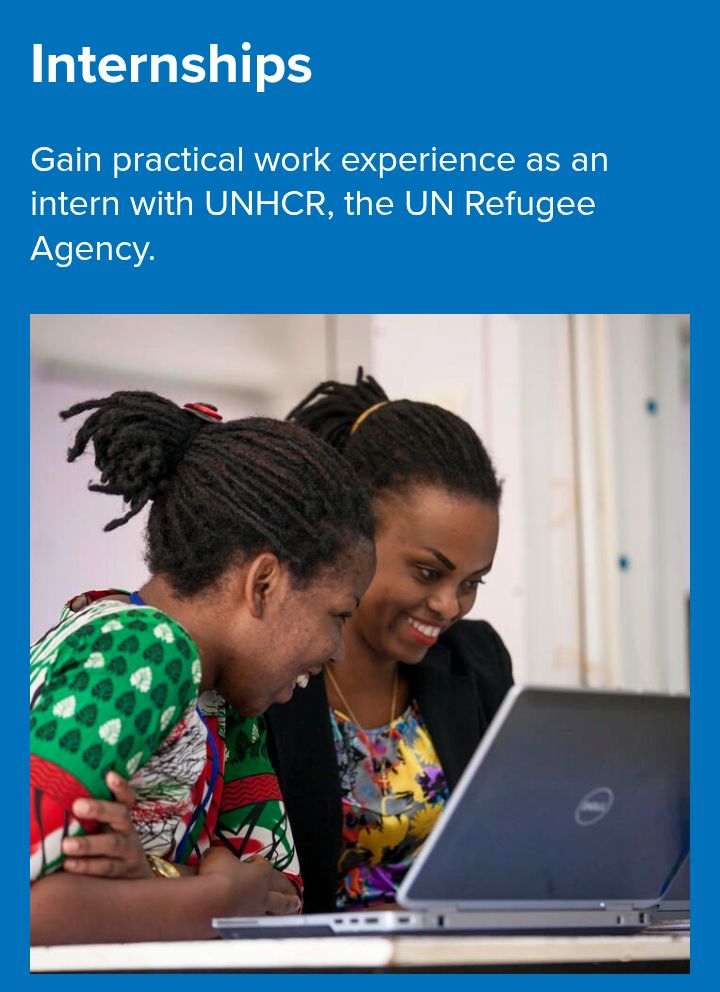
Are you a university student or recent graduate looking for an opportunity to gain professional experience with the United Nations? If you are interested in humanitarian work, refugee protection, international development, human rights, or related fields, the UNHCR Internship Programme could be an opportunity worth exploring.
The United Nations High Commissioner for Refugees (UNHCR) offers internships to eligible students and recent graduates who want to gain practical experience in the humanitarian sector while contributing to the organisation’s work supporting people forced to flee their homes.
Through the programme, interns may have the opportunity to work in different UNHCR offices around the world, including headquarters in Geneva, global service centres, and country or field offices.
The internships are connected to the organisation’s operational needs and may involve work in areas such as protection, administration, communications, procurement, finance, data analysis, environmental sustainability, and other professional functions.
One important thing to understand from the beginning is that UNHCR internships are not limited to students studying international relations or humanitarian affairs. The organisation requires different kinds of expertise to carry out its work, which means students from a range of academic backgrounds may find relevant opportunities.
For example, a student studying law may be interested in refugee protection, while someone studying economics, environmental science, information technology, communications, or business administration may find internship opportunities related to their field.
In this guide, I will explain how the UNHCR Internship Programme works, who can apply, what interns may receive, where internships are available, and how to approach the application process.
I will also highlight some practical details applicants should pay attention to before submitting an application, particularly the eligibility requirements, internship duration, financial support, and medical insurance obligations.
UNHCR Internship Programme: Overview
Here are the key details applicants should know before applying.
| Programme Detail | Information |
| Programme Name | UNHCR Internship Programme |
| Organisation | United Nations High Commissioner for Refugees |
| Internship Locations | Geneva, Global Service Centres, country offices and field offices |
| Eligible Applicants | Current university students and recent graduates |
| Academic Requirement | At least two years of undergraduate studies completed |
| Eligible Nationalities | All nationalities |
| Internship Duration | Normally 2–6 months |
| Maximum Full-Time Duration | Up to 8 months cumulatively |
| Maximum Part-Time Duration | Up to 12 months cumulatively |
| Financial Support | Allowance for eligible interns who do not receive outside financial support |
| Travel Support | Return travel reimbursement may be provided to eligible interns coming from outside the duty station country |
| Application Method | UNHCR recruitment platform |
| Application Period | Internships are advertised throughout the year |
Important: UNHCR internships are advertised according to the needs and capacity of individual offices. There is no single application deadline for all internships.
Applicants should therefore regularly check the official recruitment platform for current vacancies.
What Is the UNHCR Internship Programme?
The UNHCR Internship Programme gives eligible students and recent graduates the opportunity to gain professional experience in the humanitarian sector.
UNHCR works to protect people who have been forced to flee their homes because of conflict, persecution, violence, or other circumstances that require international protection. Its work involves much more than emergency assistance.
The organisation also supports protection activities, coordination, legal and policy work, community-based programmes, procurement, logistics, financial management, communications, and other functions that help humanitarian operations run effectively.
Interns may contribute to the work of different teams depending on the position advertised and their academic background.
For some interns, the experience may involve research, drafting documents, preparing reports, or analysing information.
For others, it may involve administrative support, procurement processes, communications activities, or work connected to specific humanitarian programmes.
The exact responsibilities depend on the vacancy and the office where the internship is based.
Why Consider an Internship With UNHCR?
There are several reasons why students and recent graduates may want to consider applying.
1. Gain practical experience in the humanitarian sector
For students interested in humanitarian affairs, refugee protection, international development, or human rights, professional experience can help them understand how humanitarian organisations operate.
An internship can provide a closer look at the work behind humanitarian programmes.
It may involve contributing to reports, supporting research, helping coordinate activities, analysing information, or working with teams responsible for different aspects of UNHCR’s mandate.
The experience can also help interns understand the relationship between policy, administration, and field operations.
Bank of America Summer Internship 2026: Paid International Internship Opportunities for Students
2. Work with experienced professionals
UNHCR interns may work alongside staff members with experience in humanitarian operations, protection, programme management, finance, administration, and other professional areas.
This can help interns understand the expectations of a professional working environment and learn how their academic knowledge applies to real assignments.
3. Explore different career paths
Not every internship at UNHCR is focused on refugee protection or fieldwork.
The organisation also requires people with skills in communications, procurement, information management, finance, human resources, data analysis, and other areas.
This means students from different disciplines may find internship opportunities that align with their academic background and career interests.
4. Gain international professional experience
UNHCR internships may be available in different countries and duty stations.
Depending on the vacancy, an intern may work at headquarters, a global service centre, or a country or field office.
For students hoping to build a career in international organisations, the experience may help them become familiar with the working environment and professional responsibilities of a humanitarian organisation.
5. Contribute to work that supports displaced people
The programme offers interns the opportunity to contribute to UNHCR’s work supporting refugees, internally displaced people, and stateless people.
The organisation’s internship testimonials describe interns contributing to community-based protection, procurement of relief items, environmental initiatives, regional work, and budget-related activities.
These examples demonstrate that interns can contribute to practical work that supports the organisation’s wider humanitarian objectives.
Who Can Apply for the UNHCR Internship Programme?
UNHCR has specific eligibility requirements that applicants must meet. Before spending time preparing an application, I recommend checking each requirement carefully.
1. You must be a current student or recent graduate
Applicants must be either:
Currently enrolled in an undergraduate or graduate programme at a university or higher education institution accredited by UNESCO; or
A recent graduate who completed their studies within two years of applying for an internship.
This means that applicants who have already graduated may still be eligible, provided they meet the recent graduate requirement.
If you graduated more than two years ago, you should not assume that you qualify under the recent graduate category.
2. You must have completed at least two years of undergraduate studies
Applicants must have completed at least two years of undergraduate studies in a field relevant to, or of interest to, UNHCR’s work.
This requirement is important. If you are currently in your first year of university, you may not yet meet the academic requirement.
If you have completed two or more years of undergraduate study, review the specific vacancy to determine whether your academic background is relevant to the position.
3. You must meet the English language requirement
Applicants must be proficient in English at a minimum B2 level. The vacancy may also specify additional language requirements depending on the office and role.
For example, a position in a country office may require knowledge of a local or regional language. Read the vacancy carefully to identify the languages required for the specific internship.
4. You must not have an immediate relative working for UNHCR
Applicants must not have an immediate relative—father, mother, brother, or sister—working for UNHCR as a staff member under any contract type or as an affiliate at the time of application.
This requirement is specific to the relationship categories listed in the official eligibility information. If you are unsure whether your circumstances meet the requirement, seek clarification from UNHCR before applying.
5. You must not have exceeded the maximum internship duration
UNHCR limits the cumulative period of internships. The maximum is:
8 months for full-time internships
12 months for part-time internships
These limits apply cumulatively, including any previous internships you have completed with UNHCR.
If you have already interned with the organisation, check how much of the maximum duration you have used before applying for another position.
Which Academic Backgrounds Are Suitable?
UNHCR internships are connected to the needs of individual offices and teams.
This means applicants should not limit their search to vacancies that explicitly mention refugee studies or international relations. Depending on the vacancy, relevant academic backgrounds may include:
International relations
Law
Political science
Human rights
Development studies
Economics
Social sciences
Communications
Journalism
Public administration
Business administration
Finance
Accounting
Information technology
Data science
Environmental studies
Logistics and supply chain management
Other relevant fields
The key is to identify how your academic background connects to the work described in the vacancy.
For example, if you are studying finance, you might search for internships involving budgeting, financial administration, or programme support.
If you are studying law, you may look for opportunities connected to protection, legal affairs, or policy. If your background is in communications, you may find roles involving writing, media, digital communication, or public information.
Where Are UNHCR Internships Available?
UNHCR internships are offered at different locations depending on the organisation’s needs and the capacity of individual offices to receive and supervise interns.
The official programme information identifies several possible locations.
UNHCR Headquarters in Geneva, Switzerland
Geneva is home to UNHCR headquarters. Internships based there may be connected to different headquarters functions, depending on the advertised vacancy.
Global Service Centres
Internships may also be available at UNHCR Global Service Centres in: Amman, Jordan, Budapest, Hungary, Copenhagen, Denmark
The types of roles available will depend on the work carried out by the relevant office and its capacity to supervise interns.
Country and field offices
UNHCR also offers internships in country offices and field offices. These opportunities may be particularly relevant to applicants interested in humanitarian operations and country-level work.
However, applicants should not assume that every internship in a field office involves direct interaction with refugees. Some positions may focus on administrative, technical, programme, or other support functions.
Can UNHCR interns work remotely?
The programme states that, subject to approval by their managers, interns may telework within or outside the country of their duty station. Remote arrangements depend on the specific office and approval.
Applicants should not assume that every internship can be completed remotely. Check the vacancy and confirm the working arrangement with the relevant office.
How Long Does a UNHCR Internship Last?
UNHCR internships can begin at any time during the year. They normally last between two and six months, with the possibility of extension. The maximum cumulative duration is:
| Internship Type | Maximum Duration |
| Full-time | Up to 8 months |
| Part-time | Up to 12 months |
The maximum periods include any previous internships with UNHCR. When applying, pay attention to the duration stated in the vacancy.
Some internships may be designed for a shorter placement, while others may offer the possibility of extension depending on the needs of the office and applicable rules.
UNHCR Internship Benefits and Financial Support
One of the most important parts of the UNHCR Internship Programme is understanding the financial arrangements.
The programme provides an allowance to eligible interns who do not receive financial support from an outside party. This allowance is intended to partially help with costs related to food, local transportation, and living expenses.
Monthly allowance for full-time interns
The allowance for full-time internships is calculated using the monthly net salary of a General Service (GS) level 3 step 1 staff member. The amount corresponds to:
50% of the applicable monthly net salary in “H” duty stations; or
70% of the applicable monthly net salary in all other duty stations.
The exact amount depends on the duty station and the applicable salary scale. Applicants should consult the official UNHCR information on salary scales and duty station categories to understand the applicable rate.
Allowance for part-time interns
Part-time interns receive an allowance calculated at 50% of the applicable full-time internship allowance at the respective duty station.
Are remote internships compensated?
Yes. The programme states that remote internships are also compensated. However, the applicable amount and conditions should be confirmed in the specific vacancy or with the office offering the internship.
Travel reimbursement
UNHCR may reimburse return travel costs for interns who are engaged from a location outside the country of their duty station.
The reimbursement is for travel by the most economical route available, irrespective of the duration of the journey.
This applies unless the travel is already provided or paid for by the intern’s sponsoring entity. Applicants should note that the programme states that the intern is responsible for arranging a visa and covering related visa costs.
UNHCR can provide supporting documents required for the visa process.
Medical insurance
Before beginning an internship, candidates are responsible for arranging medical insurance and providing proof of valid coverage for the period of the contract.
The insurance should cover both accident and illness and provide the necessary geographical coverage. UNHCR does not cover the costs of interns’ medical insurance or medical evacuation.
Interns working in locations where medical facilities are inadequate are advised to ensure that their insurance covers emergency medical evacuation.
This is an important detail to consider before accepting an internship, particularly if the position is based in a country where you do not currently live.
How to Find Current UNHCR Internship Vacancies
UNHCR internships are advertised on the organisation’s main recruitment platform.
New opportunities are regularly added, so applicants should check the platform frequently. Some regional and country offices also publish internship opportunities on their own websites.
Step 1: Visit the UNHCR recruitment platform
Start by visiting the official UNHCR recruitment platform. Search for internship vacancies and review the available positions.
Step 2: Search using relevant keywords
Rather than searching only for the word “internship,” try using terms related to your academic background and career interests. For example:
Internship
Protection
Communications
Finance
Programme
Research
Data
Legal
Administration
Procurement
Environment
The relevant keywords will depend on the type of work you want to do.
Step 3: Check the vacancy details
Open the vacancy and review the information carefully. Pay attention to:
Internship location
Academic requirements
Language requirements
Responsibilities
Duration
Working arrangements
Application deadline
Documents requested
Any additional eligibility conditions
Do not apply simply because the title sounds interesting. The description will help you determine whether your background and interests are relevant to the position.
Step 4: Review the office website
If the vacancy is associated with a regional or country office, visit that office’s website where relevant.
This can help you understand the office’s work and the context in which the internship will take place. It may also help you identify the specific activities or programmes that are connected to the role.
How to Apply for a UNHCR Internship
Interested applicants should apply through the main UNHCR recruitment platform. The official programme page also directs applicants to the organisation’s application and selection information and internship FAQs.
Step 1: Create an account on the recruitment platform
Begin by creating an account on the UNHCR recruitment platform, following the official instructions. Use an email address that you regularly check.
Keep your login information safe, because you may need to return to the platform to review your application or check its status.
Step 2: Select an internship vacancy
Search for an internship that matches your academic background and interests. Read the vacancy description carefully before starting the application.
If the vacancy lists specific academic, language, or other requirements, make sure you meet them.
Step 3: Prepare the requested information and documents
The exact application requirements may vary by vacancy.
Review the application instructions and prepare the information requested by the organisation. Do not assume that every internship uses the same document checklist.
Step 4: Complete the application
Fill in the application form according to the instructions. Make sure that the information you provide is accurate and consistent with your academic records and other documents.
If the application asks about your education, employment, or previous experience, provide clear information that helps the recruiter understand your background.
Step 5: Submit your application
Before submitting, review the application to make sure you have completed the required sections.
Check that you have selected the correct vacancy and included the requested information. Submit your application before the deadline specified in the vacancy.
How to Make Your UNHCR Internship Application Stronger
The most useful way to approach a UNHCR internship application is to focus on the actual vacancy.
The organisation works across many professional areas, and the skills required for one internship may be very different from those required for another. Here are some practical points to consider.
Understand the work before applying
Read the vacancy description and identify what the intern is expected to contribute.
For example, if the position involves preparing reports, your application should make it easy for the recruiter to understand your writing, research, or analytical experience.
If the internship involves data or financial information, highlight relevant coursework, projects, or experience working with data.
If the position involves communications, explain your experience with writing, editing, research, or digital communication where relevant.
Connect your academic background to the role
A common mistake is to focus entirely on the degree title. The more useful question is: What have I studied or done that relates to the actual responsibilities of this internship?
For example, a student studying economics may have relevant experience through coursework in statistics, public policy, development economics, or research.
A law student may have experience analysing legal documents, conducting research, or studying international protection.
A communications student may have written articles, supported campaigns, or developed content for a university organisation. The connection should be clear and specific.
Use examples rather than broad claims
Instead of simply describing yourself as hardworking or passionate, identify examples that demonstrate your skills.
If you have worked on a research project, explain the subject and your contribution.
If you have supported an organisation, describe the tasks you handled.
If you have used Excel, statistical software, writing tools, or other relevant skills, mention them where they connect to the vacancy. The goal is to help the recruiter understand what you can contribute to the role.
Be honest about your experience
You do not need to pretend to have worked in a humanitarian emergency or with refugees if you have not.
The programme is designed for students and recent graduates who want to gain professional experience. Your application should reflect your actual academic background, skills, and interests.
If you are new to the humanitarian sector, explain why you are interested in learning about the work and how the internship connects to your studies or future career goals.
Check the eligibility requirements before submitting
A strong application cannot compensate for failing to meet a mandatory eligibility requirement. Before applying, confirm that:
You are a current student or recent graduate within the stated period.
You have completed at least two years of undergraduate studies.
You meet the English proficiency requirement.
You do not have an immediate relative covered by the restriction working for UNHCR.
You have not exceeded the maximum cumulative internship duration.
These requirements should be checked before you invest time in the application.
What Can You Learn From UNHCR Interns?
UNHCR’s published intern testimonials provide examples of the types of experiences interns may have.
Community-Based Protection
One former intern, Chrissy Sandwen, described working with the Community-Based Protection team.
Her experience involved contributing to work that helped ensure the voices and capacities of refugees, internally displaced people, and stateless people were incorporated into protection activities.
This illustrates how an internship can connect professional work with the organisation’s wider protection objectives.
Energy and Environment
Another former intern, Natasha Chabbra, described being involved in procurement processes for relief items, including fuel-efficient cookstoves and portable solar lamps with mobile charging.
This example shows that humanitarian work can also involve technical and operational activities.
Procurement, environmental considerations, and the selection of appropriate relief items can all affect the support provided to displaced people.
Regional and budget-related work
A former intern working with the Regional Africa Bureau described contributing to Senior Management Committee notes and compiling budget information in Excel files.
The intern also described opportunities to meet refugees and listen to their experiences.
This is a useful reminder that internship work can include a mixture of administrative, analytical, and programme-related responsibilities.
The exact tasks will depend on the internship vacancy and the office where the intern is placed.
Is the UNHCR Internship Programme Open to All Nationalities?
Yes. The programme is open to all nationalities.
UNHCR states that it encourages applications from qualified candidates without distinction on grounds such as race, colour, sex, national origin, age, religion, disability, sexual orientation, or gender identity.
The organisation also welcomes applications from candidates with a refugee or stateless background. Applicants should still review the eligibility requirements and the details of the specific vacancy.
Important Warning: UNHCR Does Not Charge Application Fees
UNHCR states that it does not charge a fee at any stage of its recruitment process. This includes:
Application
Interview
Meeting
Travel
Processing
Training
If someone asks you to pay money to secure a UNHCR internship, arrange an interview, or receive a recruitment offer, be cautious.
Use the official UNHCR website and recruitment platform to verify opportunities. Do not send money or personal documents to individuals claiming to guarantee a position.
Frequently Asked Questions About UNHCR Internships
Can international students apply for UNHCR internships?
Yes. The programme is open to all nationalities. Applicants must meet the academic, language, and other eligibility requirements.
Can I apply if I have already graduated?
Yes, if you completed your studies within two years of applying for the internship.
Is the UNHCR Internship Programme paid?
Eligible interns who do not receive financial support from an outside party receive an allowance to partially support food, local transportation, and living expenses.
The allowance is calculated according to the duty station and whether the internship is full-time or part-time.
Does UNHCR provide travel support?
UNHCR may reimburse return travel costs for eligible interns engaged from a location outside the country of the duty station, unless travel is already covered by a sponsoring entity.
The reimbursement is subject to the programme’s conditions and the most economical route available.
Does UNHCR provide accommodation?
The programme information provided does not state that accommodation is provided.
The allowance is intended to partially support living expenses, but applicants should check the specific vacancy and office arrangements before accepting an internship.
Can I apply for a remote UNHCR internship?
Some interns may telework within or outside the country of their duty station, subject to approval by their managers. Remote work is not guaranteed for every internship.
How long does a UNHCR internship last?
Internships normally last between two and six months. They may be extended up to eight months for full-time internships or 12 months for part-time internships, subject to the cumulative maximum.
Do I need to speak English?
Applicants must be proficient in English at a minimum B2 level. Additional language requirements may apply depending on the vacancy.
When can I apply?
Internships can begin at any time during the year. New vacancies are regularly advertised on the UNHCR recruitment platform and some regional or country office websites.
Final Thoughts: Should You Apply for a UNHCR Internship?
If you are a student or recent graduate interested in humanitarian work, international development, refugee protection, human rights, or related professional areas, the UNHCR Internship Programme is worth exploring.
The programme provides an opportunity to gain practical experience while contributing to the work of an organisation that supports people forced to flee.
It is also open to applicants from different academic backgrounds and nationalities. The most important step is to find a vacancy that matches your studies, skills, and interests.
Rather than submitting the same application to every internship you find, take time to read the responsibilities and requirements of each position.
A role in communications may require a different set of skills from a role in finance, protection, research, or programme support. Understanding that difference will help you prepare a more relevant application.
Start by visiting the official UNHCR Internship Programme page and follow the links to current vacancies and application instructions.
Official UNHCR Internship Programme:
https://www.unhcr.org/get-involved/work-us/careers-unhcr/types-contracts-and-appointments/internships
Browse Related internships programs on scholars Africa website below
Disney Internships 2026–2027: How to Apply for Internship Opportunities at The Walt Disney Company
UNDP Digital, AI and Innovation Internship 2026: Paid Remote Opportunity for Students and Graduates
CSIS Communications and Operations Internship 2026, Paid Full-Time Opportunity for Graduates
Discover more from Scholars Africa
Subscribe to get the latest posts sent to your email.

About Scholars Africa Editorial Team
Scholars Africa Editorial Team is dedicated to researching and publishing verified scholarships, jobs, and global opportunities. Our content is built on extensive analysis of application trends, eligibility criteria, and selection patterns to help applicants succeed at every stage. Our team has reviewed hundreds of scholarship programs and application processes across multiple countries.